


In today’s world, nearly every part of our lives has a digital footprint. While technology can be a wonderful tool, it also opens the door to risks if we don’t protect ourselves. One of the simplest yet most powerful ways to guard your information is by using strong passwords.
Why Strong Passwords Matter
Think of your password like the lock on your front door. A weak lock is easy to pick, leaving your home vulnerable. In the same way, a weak password makes it easy for hackers to gain access to your accounts. That could mean stolen money, compromised personal details, or even the loss of important family memories stored online.
Cybercriminals are also now using artificial intelligence tools to help crack weak passwords. These AI programs can generate millions of likely combinations at lightning speed, making simple or predictable passwords even more vulnerable. This is why having long, complex, and unique passwords is more important today than ever.
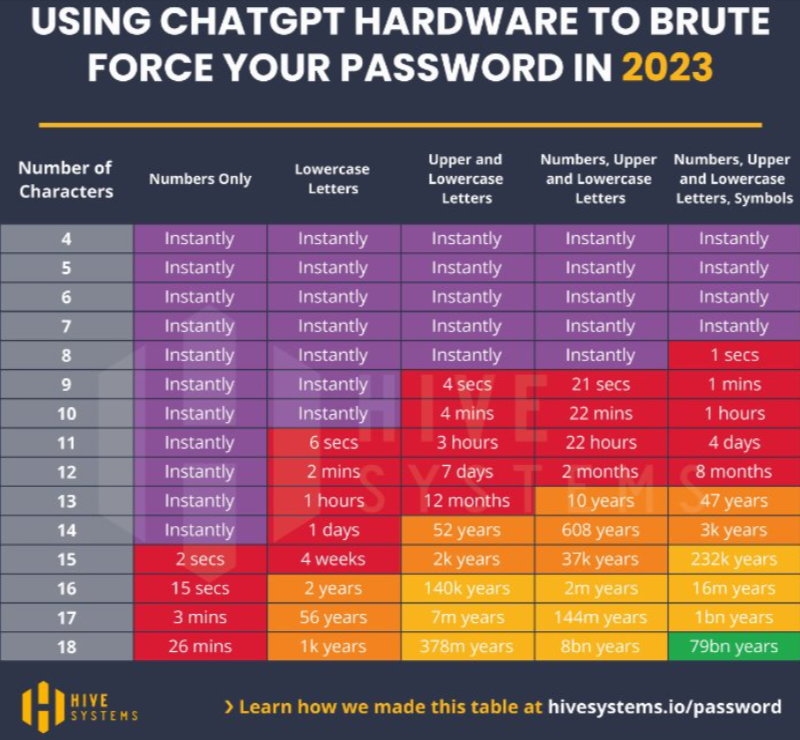
Source: Digital Privacy and Protection & HIVE systems
What Makes a Password Strong?
A good password isn’t something easy to guess. Avoid using your children’s names, birthdates, or the word “password.” Instead, follow these guidelines:
- At least 13 characters long
- A mix of uppercase, lowercase, numbers, and symbols
- No common words or predictable patterns
- Randomly generated
A great option is to use a passphrase—a string of unrelated words or a sentence that you’ll remember but others can’t easily guess (example: Giraffe!Piano77Cloud).
How to Manage Your Passwords
Remembering dozens of strong, unique passwords is not only overwhelming, but impossible for most people. Thankfully, there are tools and habits that make it manageable:
- Password Managers: Using a reliable password manager can help you store your passwords securely and help you generate new, strong ones. I strongly recommend using a manager that has open-sourced code and is free or low-cost, such as Bitwarden or ProtonPass.
- Two-Factor Authentication (2FA): Add an extra layer of protection by requiring a code sent to your phone or email in addition to your password.
- Update Regularly: Change your passwords if you suspect a breach—or at least once a year for your most sensitive accounts.
- Don’t Reuse Passwords: Each account should have its own unique password.
At the end of the day, protecting your digital life comes down to being proactive. Just as you wouldn’t leave your front door unlocked, you shouldn’t leave your online accounts unguarded. Strong passwords, paired with habits like two-factor authentication and regular updates, create a simple but powerful defense. Taking a few minutes now to strengthen your passwords can save you from stress, financial loss, and stolen personal information later.
In one of our recent webinars, Mark Hurley, CEO of Digital Privacy and Protection, shared more on the importance of strong passwords. Watch the webinar replay today for more on strong cybersecurity.
If you’d like to learn more about working with one of our advisors, start the conversation today by filling out our Discovery Questionnaire and schedule your 30-minute introductory call. We would love to learn more about you to determine whether Harvest Point® would be a good fit to serve you.